Chapter I · Ano Volos
Άνω Βόλος · Ano Volos
The western slopes of Pelion · Magnesia
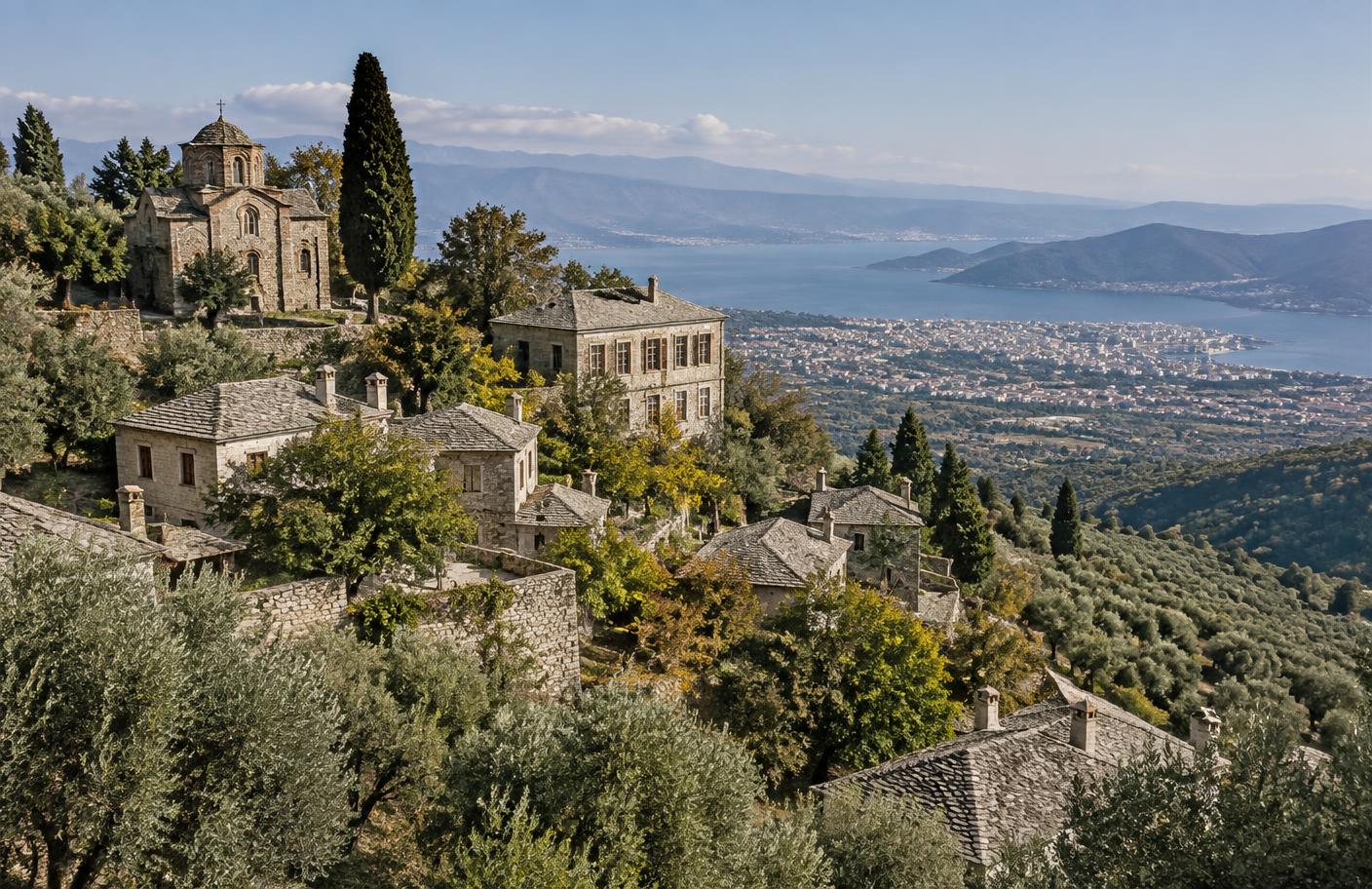
The place in history
Known as Ano Machalas until 1916, Ano Volos developed as a group of hillside quarters above the port. Its nineteenth-century households participated in silk weaving, olive oil and wine production, milling, and regional trade.
The settlement remains recognized for its traditional character. For Archontoula Saratsi and the maternal Saratsis family, Ano Volos belongs to a close Pelion landscape shared with neighboring Anakasia and Makrinitsa.
Maternal inheritance · Pelion
The archontiko tradition
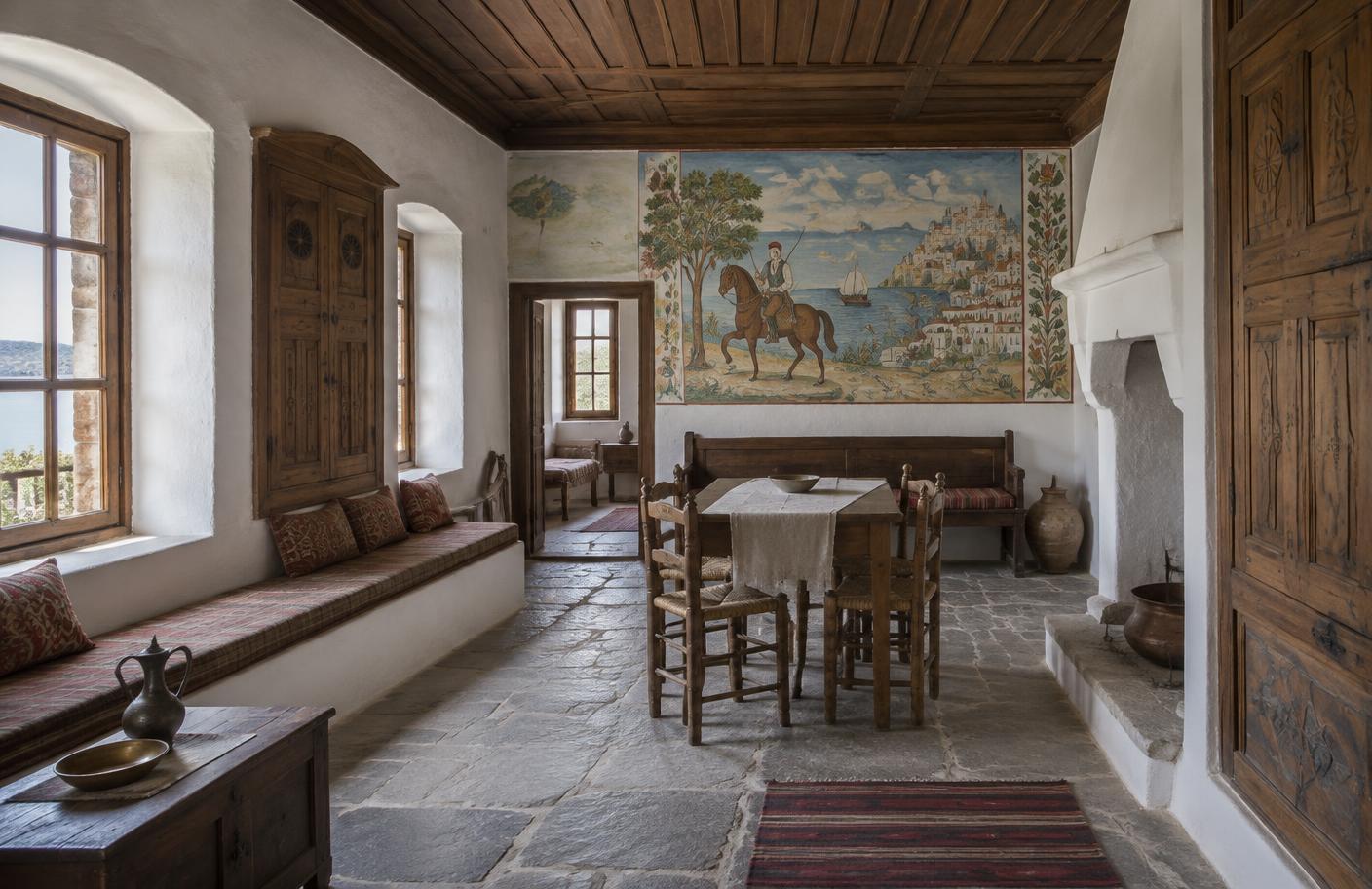
The Pelion archontiko was both household and stronghold: thick stone lower floors had few openings, while lighter timber-framed upper rooms could project outward as sachnisia. Slate roofs, carved timber ceilings, built-in cupboards, and painted decoration gave these houses their distinctive character.
The name Archontoula evokes the Greek word archontissa—lady or mistress of an archontiko. This linguistic resonance is presented as family reflection, not as proof of the name’s origin. Nearby Anakasia preserves the Kontos Mansion, whose rooms painted by Theophilos make this regional domestic tradition visible today.
Landmarks
- 1
Episkopi hill
A historic hilltop associated with Byzantine remains and long settlement continuity.
- 2
The Scholarchio
The old school, part of the village's civic and educational memory.
- 3
Historic chapels
The Transfiguration, Saint John, and Saint Demetrios preserve the parish landscape.
Archives & sources
- Municipality of Volos local history
Municipal account of Ano Volos and the former Ano Machalas.
- Municipality of Volos — Theophilos Museum
The municipal account of the Theophilos Museum in neighboring Anakasia and its place in the Iolkos cultural landscape.
- GAK Magnesia family archives
Regional collections for civil, notarial, educational, and family research.