Three maternal villages · c. 1200–present

Χρονολόγιο του Πηλίου · Pelion Timeline

Ano Volos, Anakasia, and Makrinitsa form one connected family landscape. Their histories are shown separately, with every village linked back to its place archive and family charts.

Village 1 · Maternal Pelion

Άνω Βόλος · Ano Volos

The remembered home landscape of Archontoula Saratsi and the maternal Saratsis household.

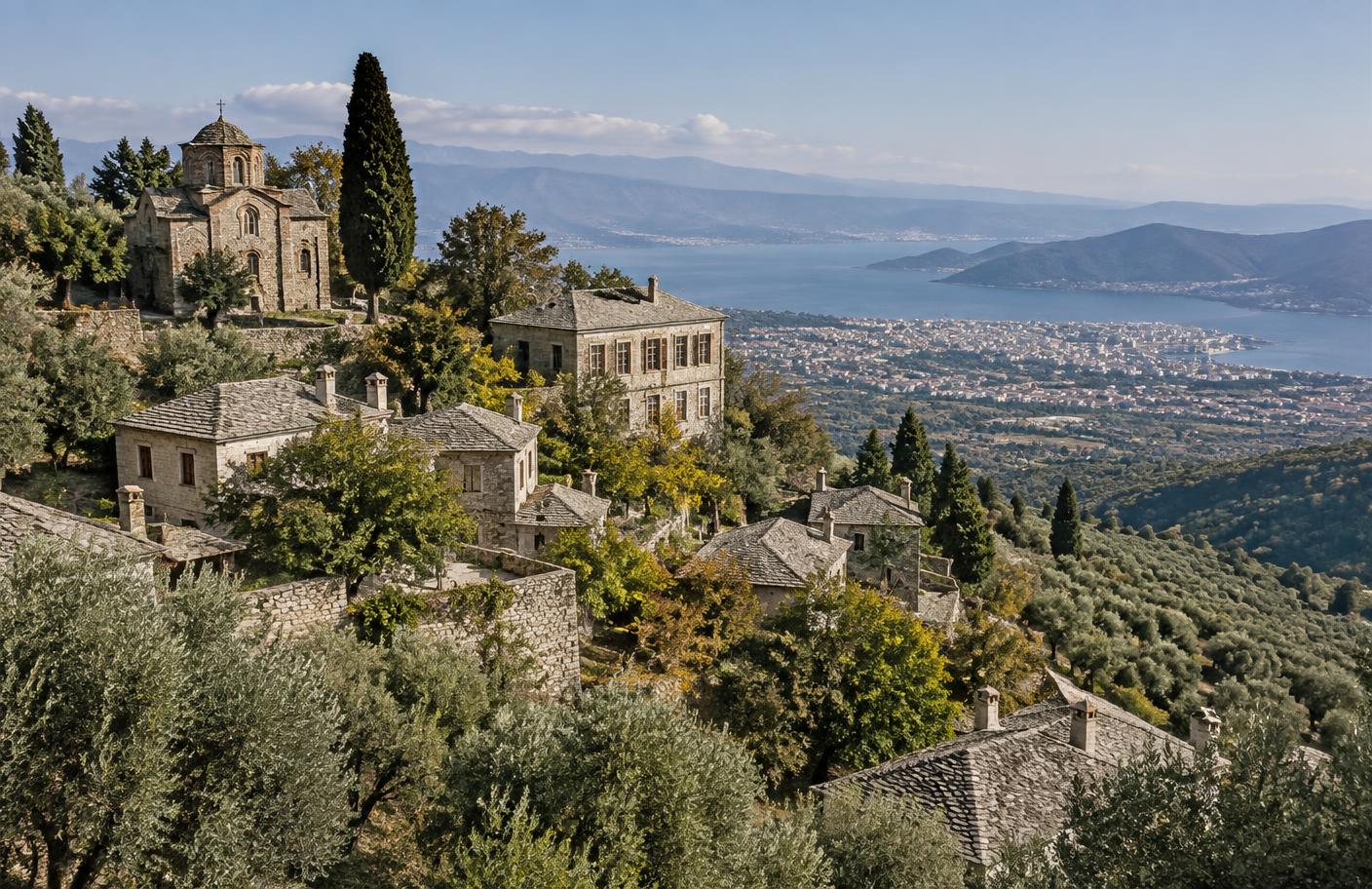
Stone houses and churches on the Pelion slopes above Volos
  1. 15th century tradition

    Settlement on the Pelion slopes

    Local history associates the nucleus of Ano Machalas with Christian households moving uphill after Ottoman occupation of the Castle of Golos. The date belongs to municipal tradition rather than a surviving foundation record.

    Municipality of Volos local history
  2. 19th century

    Households and archontika

    Stone houses, workshops, schools, and chapels formed the domestic landscape inherited by the Saratsis family of Ano Volos.

    Municipality of Volos local history
  3. 1881

    Thessaly joins the Greek state

    After the annexation of Thessaly, Ano Machalas and neighboring Anakasia entered the modern administrative history of the Iolkos settlements.

    Municipality of Volos local history
  4. 1916

    Ano Machalas becomes Ano Volos

    The settlement’s modern name marks its close relationship with the growing city below while preserving its distinct Pelion identity.

    Municipality of Volos local history
  5. Present

    The maternal family landscape

    Ano Volos remains the central place attached to Archontoula Saratsi’s family record and the neighboring worlds of Anakasia and Makrinitsa.

    Ano Volos place archive

Village 2 · Maternal Pelion

Ανακασιά · Anakasia

The painted cultural setting beside Ano Volos, where Theophilos preserved the imagery of Pelion household life.

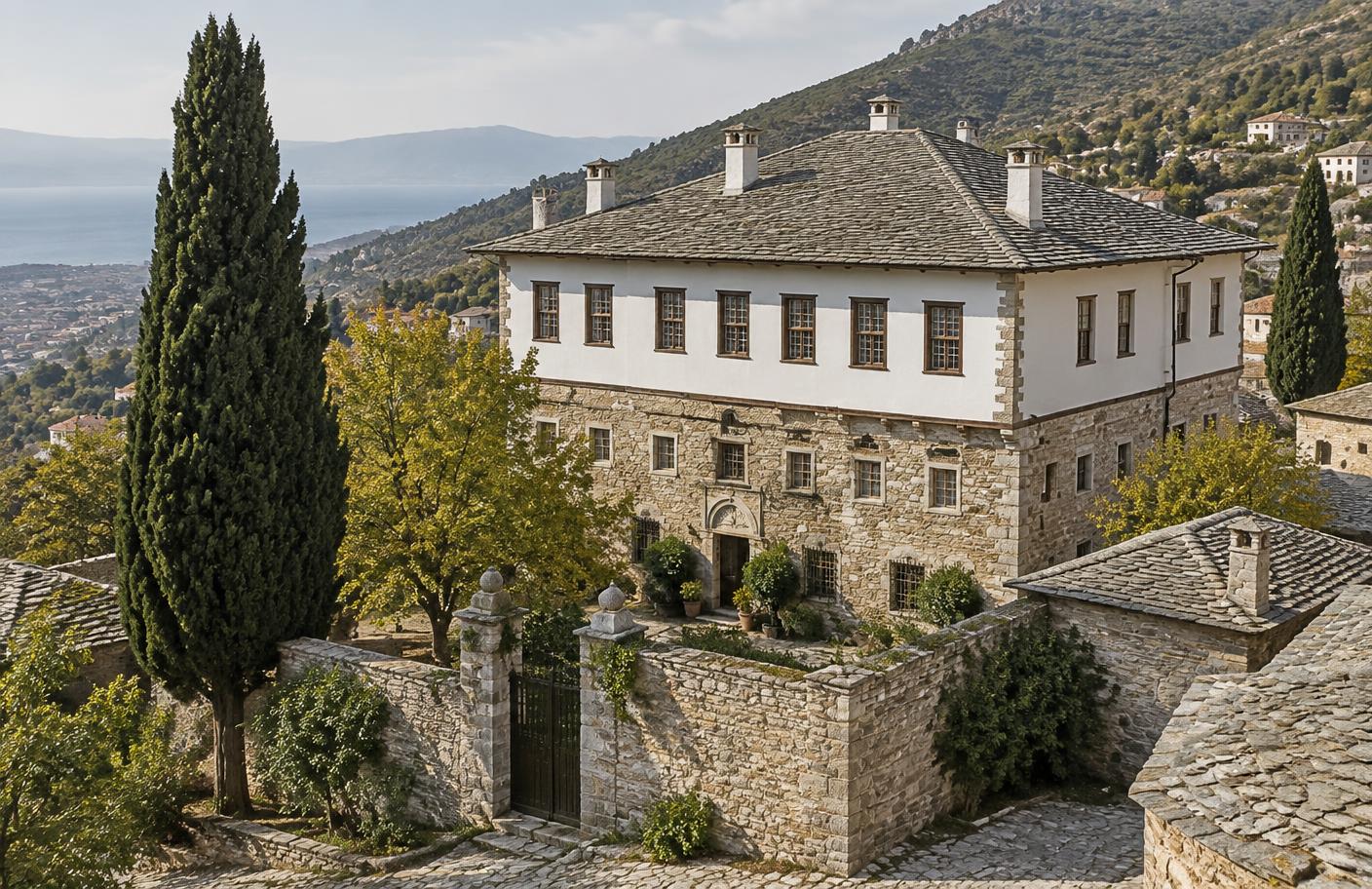
Historically grounded reconstruction of a Pelion archontiko in Anakasia above Volos
  1. 19th century

    The Hatzianastasis mansion

    The three-storey Pelion archontiko later known as the Kontos Mansion was built with a stone base, timber-framed upper floor, projecting rooms, and a slate roof.

    Greek Ministry of Culture
  2. 1905

    Yiannis Kontos acquires the mansion

    The miller Yiannis Kontos acquired the Hatzianastasis family house that would become Anakasia’s best-known painted landmark.

    Greek Ministry of Culture
  3. 1912

    Theophilos paints the upper salon

    Fourteen inscribed scenes of the Greek Revolution, hunting, flowers, horsemen, and Pelion landscapes transformed the mansion’s upper rooms.

    Greek Ministry of Culture
  4. 1955

    The earthquakes damage the house

    The Volos earthquakes damaged the protected mansion, leading to state acquisition, conservation, and its later life as the Theophilos Museum.

    Greek Ministry of Culture
  5. 1962

  6. 1965–1966

    Acquisition, conservation, and museum life

    The state acquired the mansion in 1965; restoration and mural conservation followed in 1966, opening the rooms to the public as the Theophilos Museum.

    Greek Ministry of Culture

Village 3 · Maternal Pelion

Μακρινίτσα · Makrinitsa

The upper mountain point of the maternal Pelion geography shared with Ano Volos and Anakasia.

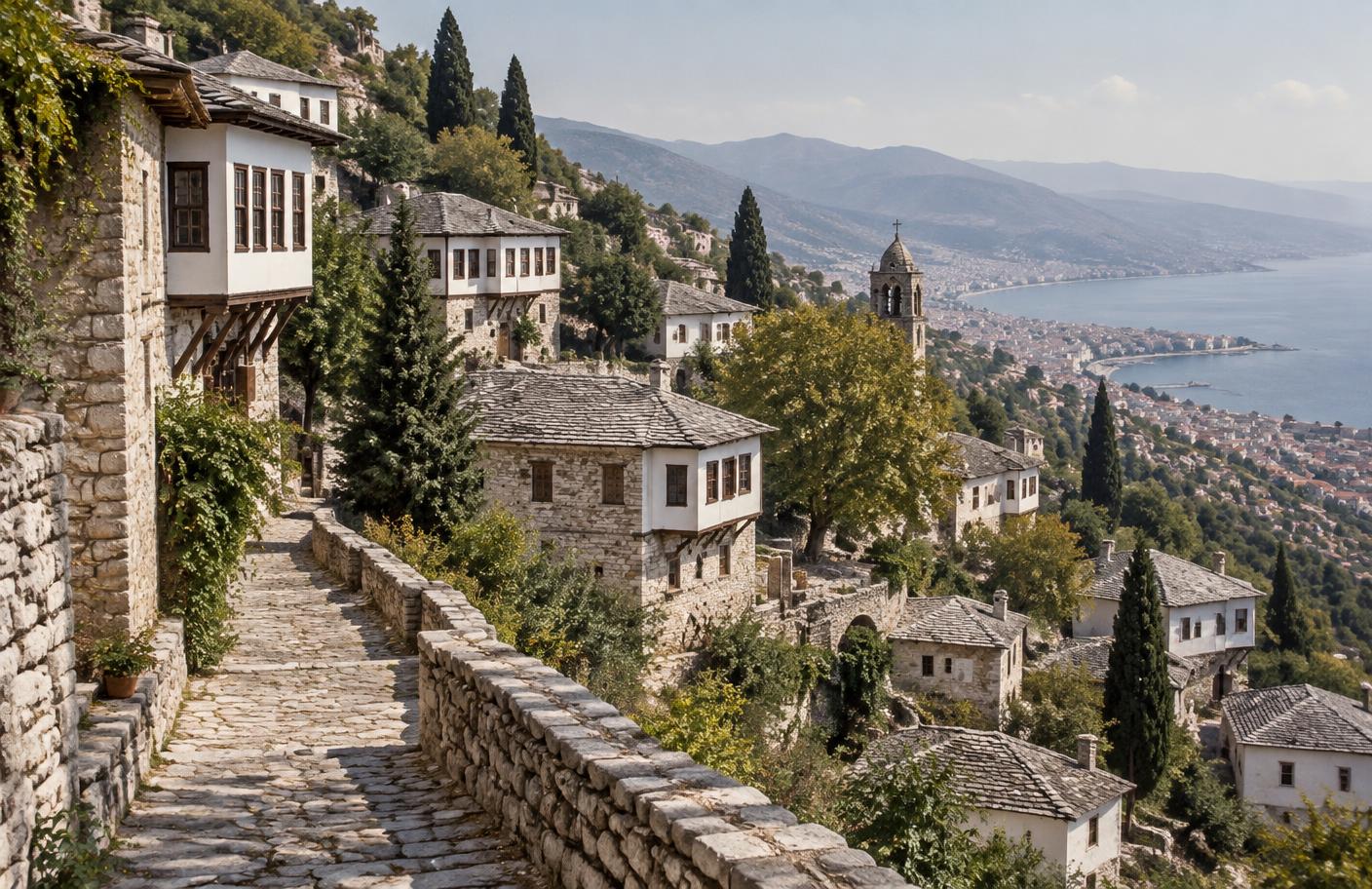
Historically grounded reconstruction of Makrinitsa's stone mansions and cobbled lanes above Volos
  1. Early 13th century

  2. 1615–1840

    A self-governing vakouf village

    Makrinitsa’s protected administrative status and lighter taxation helped its population, trade, and craft life grow before the distinction was abolished in 1840.

    Museum of Folk Art and History of Pelion
  3. c. 1750–1830

    The great age of the archontika

    Fortress-like stone bases, projecting timber upper rooms, slate roofs, and decorated interiors came to define the village’s grand houses.

    Museum of Folk Art and History of Pelion
  4. 1844

  5. 1932

    The Topali Mansion is given to the village

    The Topali family donated the mansion to the Community of Makrinitsa so that it could preserve and present the village’s folk and historical inheritance.

    Museum of Folk Art and History of Pelion
  6. 1957–1994

    Repair, protection, and restoration

    The earthquake-damaged mansion was first repaired in 1957, listed as a historic monument in 1985, and fully restored before the museum reopened in 1994.

    Museum of Folk Art and History of Pelion

One landscape, three village histories

The timeline records public history beside family memory. Links to the charts identify the relevant branches without treating cultural proximity as proof of an undocumented blood relationship.